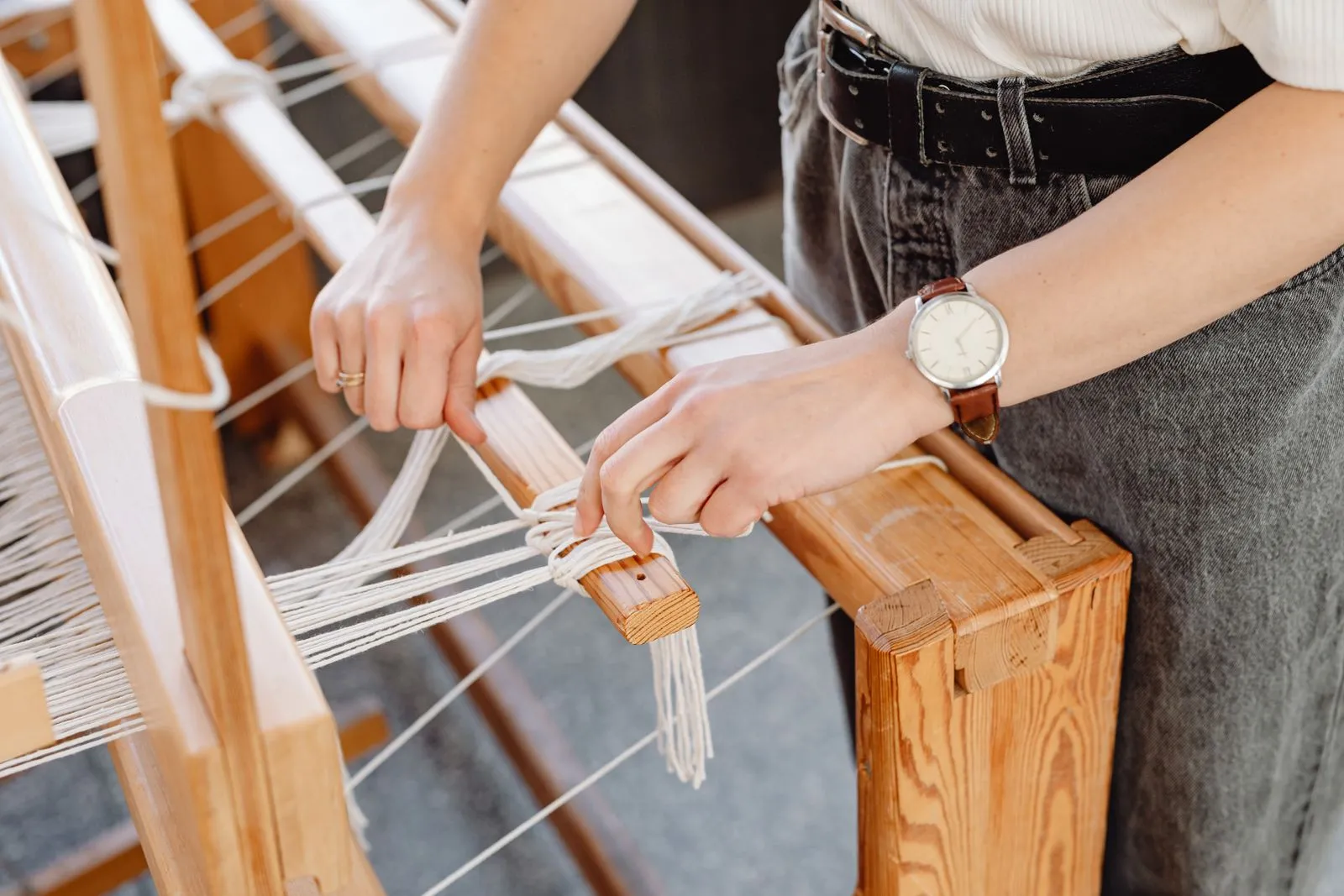
The right weaving loom depends on what you want to make and how much room you have to work. A small frame loom can suit samples and wall hangings, while a floor loom can handle wider, longer projects but needs dedicated space. Before buying, consider the loom’s type, working width, setup, and learning curve. Thinking through these details helps you choose a loom that fits your projects and your home, rather than paying for features you may not use.
Compare Common Loom Types
Frame looms are compact, straightforward options for learning basic techniques or making small pieces such as coasters and wall hangings. Rigid heddle looms offer more control over warp spacing and can weave practical projects like scarves, table runners, and lightweight fabric. Both types can work well in a home where easy storage and a smaller footprint matter.
Table looms sit on a table and use levers to control the threads, making them suitable for more complex patterns without a full floor loom. Floor looms use foot pedals, or treadles, and typically provide a wider working area and more capacity for longer projects. Compare how each loom is operated, not just its size, and consider which process feels comfortable to use.
Match Loom Size to Projects
Start with the widest item you expect to weave. A loom’s stated weaving width is the maximum fabric width it can produce, and the finished piece may be narrower after finishing. If you plan to make scarves or small household items, a compact loom may be enough. For blankets, wide fabric, or multiple pieces from one warp, check the working width carefully.
Project length matters too. Some looms can hold a long warp, while smaller models may be better suited to shorter work. Think about the finished dimensions, yarn thickness, and whether you want to weave one item or several at a time. If you are unsure, choose a loom that supports your current plans without making storage or setup difficult.
Check Your Home Setup
Measure the space where you will weave, including room to sit, move, and reach the loom comfortably. A floor loom needs enough clearance for the frame and treadles, plus space to load yarn and work on the back. A table loom still needs a stable surface and room for the yarn to extend. Check the loom’s assembled dimensions before bringing it home.
Ask how much assembly and adjustment the loom requires. Some models arrive ready for basic use; others need assembly, tuning, or careful warp setup. Find out whether instructions are included and what tools are required. Consider lighting, a chair at a comfortable height, and a place to store yarn, shuttles, and other supplies so your weaving area stays usable.
Plan for Learning and Supplies
Choose a loom with controls and instructions you can understand at your current skill level. A simpler loom can help you practice tension, basic patterns, and finishing before you take on more complex setups. If possible, see the loom in person or ask for a demonstration. Pay attention to how it feels to thread, advance the fabric, and maintain even tension.
Check what comes with the loom and what you will need to buy separately. Depending on the type, supplies may include a shuttle, heddle, bobbin, reed, warp yarn, and tools for measuring or winding yarn. Confirm that replacement parts and compatible accessories are available. A complete starter setup can make it easier to begin without discovering a missing essential after purchase.
A good loom fits your projects, your available space, and the way you want to weave. Compare working width and warp capacity, then check setup needs, included tools, and instructions before deciding. If you are exploring options, San Antonio Weaving Co. can help you consider which loom and supplies suit your plans.