
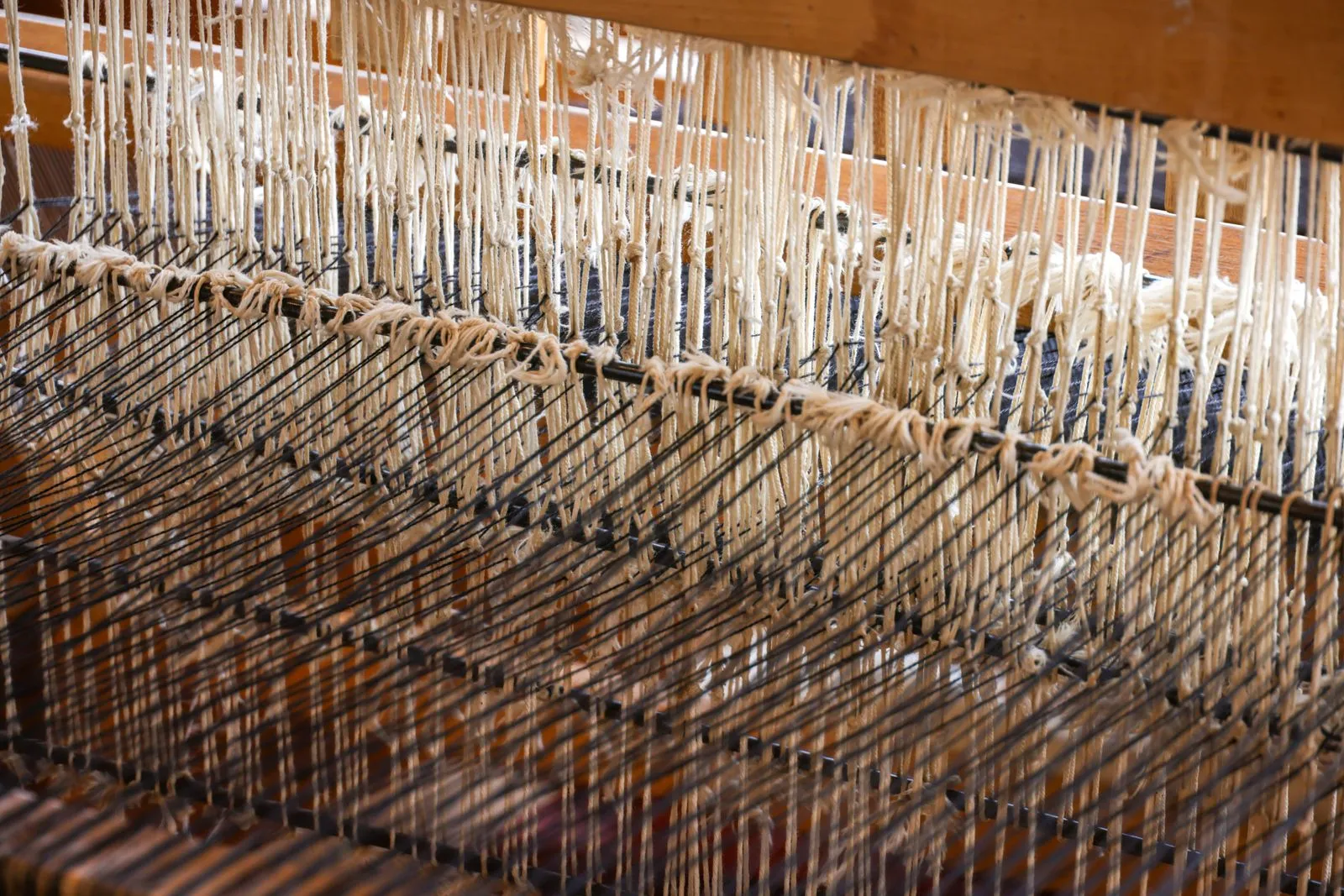
Yarn needs depend on more than the finished size of a woven piece. Width, length, yarn thickness, weave structure, loom setup, and finishing all change how much you should prepare. A little planning helps prevent running short mid-project or buying far more than you need. Start with the finished dimensions, then account for what the loom and fabric will take up. If you can, weave a small sample with your chosen yarn before purchasing the full amount.
Start With Finished Dimensions
Write down the finished width and length you want, including any fringe. Then add extra for loom requirements and finishing. Warp yarn needs additional length for tying onto the loom, tensioning, and loom waste. Weft needs extra for take-up—the yarn drawn into the fabric as it interlaces—and for trimming or hemming.
The amount of extra yarn varies by loom and project, so avoid relying on a single allowance for every piece. Check your loom’s instructions or use a calculation method suited to its setup. For a first project, add a practical buffer rather than planning to use every inch exactly.
Separate Warp and Weft
Warp yarn runs lengthwise under tension. Its total depends on the number of warp ends, the length of each end, and the loom waste. To estimate the end count, divide the planned weaving width by the sett—the number of warp ends per inch recommended for your yarn and weave. Use the yarn maker’s guidance or a weaving reference to choose a starting sett.
Weft yarn runs across the warp. Its amount depends on the woven length, picks per inch, yarn thickness, and how tightly you beat each row. A denser weave or a thicker weft can use more yarn than a loose, open fabric of the same dimensions. Treat warp and weft as separate estimates, especially if you plan to use different yarns.
Account for Yarn and Weave
Yarn weight and fiber affect how much length fits into a given area. A fine yarn generally allows more ends or picks per inch than a bulky yarn, while springy or textured yarn may behave differently under tension. Follow the yarn label for length per skein, but also consider whether the yarn is strong and smooth enough for warp use.
Weave structure changes yarn use, too. Plain weave, twill, and open or textured designs can take up yarn differently, and a compact beat uses more weft than a relaxed one. Color changes, stripes, and sampling can also require extra. When comparing yarns, look at the usable yardage per skein, not just the skein’s weight.
Make a Sample and Shopping List
A small sample gives you a useful check before committing to a larger project. Use the intended yarn, sett, and beat, then measure the sample before and after taking it off the loom and finishing it. This reveals how much the fabric draws in and helps you refine the dimensions and yarn allowance.
Before shopping, list the finished size, warp width, warp length, sett, planned picks per inch, yarn yardage per skein, and any fringe or finishing needs. Calculate warp and weft separately, then round up to full skeins and keep a modest reserve for mistakes or repairs. At San Antonio Weaving Co., bring these details along when asking for help matching yarn to a project.
A reliable yarn estimate starts with the finished dimensions, then accounts for loom waste, yarn characteristics, weave structure, and finishing. Sampling turns those estimates into a plan based on your actual materials and technique. Prepare your measurements and yarn details before shopping, and ask a weaving supply store for help checking your calculations.