
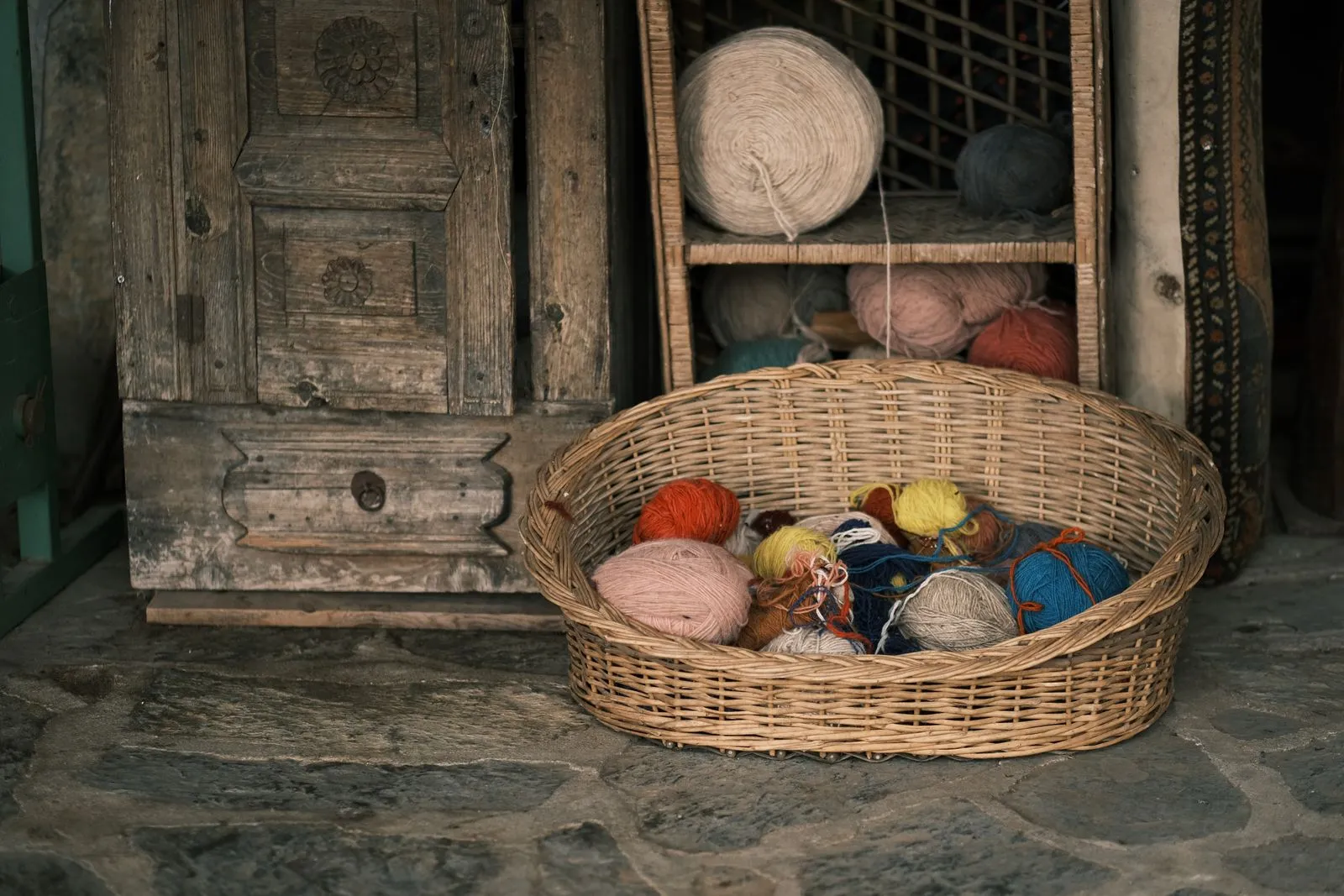
Choosing yarn can feel like a project of its own: shelves hold fibers, thicknesses, and textures that all behave differently on a loom. For a first weaving project, you do not need the most unusual yarn or a complicated mix. Start with a yarn that is easy to handle, fits your loom, and suits what you want to make. Comparing fiber, weight, and texture before you buy helps you avoid frustrating tangles and create a fabric you will enjoy using.
Start With the Fiber
Wool is a forgiving choice for beginners because it has some natural grip and can help woven threads stay in place. It is often comfortable to handle, though its warmth and care needs may not suit every project. Cotton is smooth, sturdy, and widely useful for towels, coasters, and other practical pieces. It has less stretch than wool, so keep your tension even as you weave.
Acrylic and other synthetic yarns can be affordable and available in many colors, but their feel and behavior vary by product. Blends combine qualities, such as wool’s elasticity with cotton’s strength. Read the label for fiber content and care instructions, then consider how the finished item will be used. For a first project, one familiar fiber is usually easier to manage than several very different ones.
Match the Yarn Weight
Yarn weight describes thickness, not how heavy the finished fabric will feel. Fine yarn creates a more delicate cloth but takes more passes to fill the weaving. Bulky yarn builds fabric quickly, yet may crowd a small loom or make a stiff, thick piece. Medium-weight yarn is a practical place to begin for many small projects, such as a wall hanging or simple table mat.
Check your loom’s instructions for suitable yarn and warp recommendations. The warp runs vertically under tension, so it needs to be strong enough to withstand repeated handling. A smooth, firm yarn is often easier to use for warp than a fuzzy or loosely spun one. You can use a different yarn for the weft, which runs across the warp, as long as it fits comfortably between the threads.
Consider Texture and Handling
Smooth yarn makes it easier to see where each pass goes and to correct uneven spacing. Fuzzy, slubby, boucle, or novelty yarn can add appealing texture, but irregular surfaces may catch on nearby threads or hide gaps. If you love a textured yarn, try it in a small sample first rather than using it for the entire project.
Pay attention to how the yarn feels as you pull it from the ball. A yarn that splits easily, snags, or has frequent knots can interrupt your rhythm. For a first weaving, choose a consistent strand with a clear surface and a color you can see against the warp. You can add one accent yarn later to introduce texture without making the whole piece difficult to control.
Choose for Your Project
Let the finished piece guide your choice. A small wall hanging can use a range of fibers and textures because it does not need to withstand frequent washing. For a coaster or mat, choose a sturdier yarn that can handle use and follow the care instructions. A scarf needs comfortable yarn and a drape that feels pleasant against the skin, so a sample is especially helpful.
Before buying enough for the full project, weave a short sample with your intended warp and weft. Notice whether the yarn passes through easily, whether the fabric feels too loose or dense, and how it looks when you remove it from the loom. A local weaving supply shop, such as San Antonio Weaving Co., can help you compare yarns and check whether they suit your loom.
For your first weaving project, choose yarn that fits your loom, feels manageable in your hands, and matches the finished piece’s purpose. A consistent medium-weight yarn in a familiar fiber is a reliable starting point; a small sample can confirm the choice before you commit. Gather a few options and ask a weaving supply shop for guidance as you plan your project.